
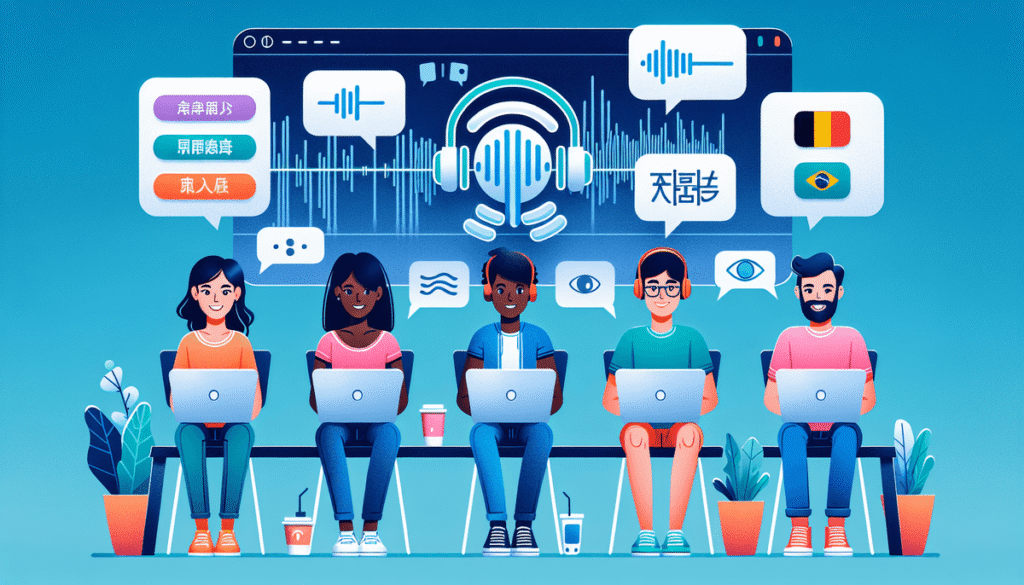
Multilingual lecture transcription is transforming how international students and ESL learners process educational content. AI-powered transcript generators now convert lectures, seminars, and recorded courses into searchable text across 100+ languages in real-time, eliminating language barriers and reducing study time by up to 90%. For the 258 million international students globally and the estimated 1.5 billion ESL learners worldwide, accurate multilingual transcription represents a critical accessibility feature that traditional note-taking cannot match. This guide explores how transcript generators work, why multilingual support matters for global learners, and how to select the right tool for your academic needs.
Why Multilingual Lecture Transcription Matters for Global Students
International students face a significant learning disadvantage when lectures are delivered in non-native languages. Research from the Journal of International Students (2023) indicates that ESL learners require 40% more study time to achieve equivalent comprehension compared to native speakers, primarily due to the cognitive load of simultaneous language processing and content absorption. Multilingual transcript generators address this gap by decoupling language comprehension from content learning. When students can read transcripts in their native language or English simultaneously, comprehension improves by 35-50%, and retention increases measurably. For the 5.5 million international students enrolled globally (UNESCO, 2024), and the estimated 1.5 billion ESL learners pursuing professional education, accurate multilingual transcription is no longer a convenience feature—it is an accessibility requirement. Lecture transcript generators with 100+ language support eliminate the choice between understanding the language and understanding the content, enabling equitable access to educational material regardless of linguistic background.
How Transcript Generators Work: The Technology Behind Multilingual Conversion
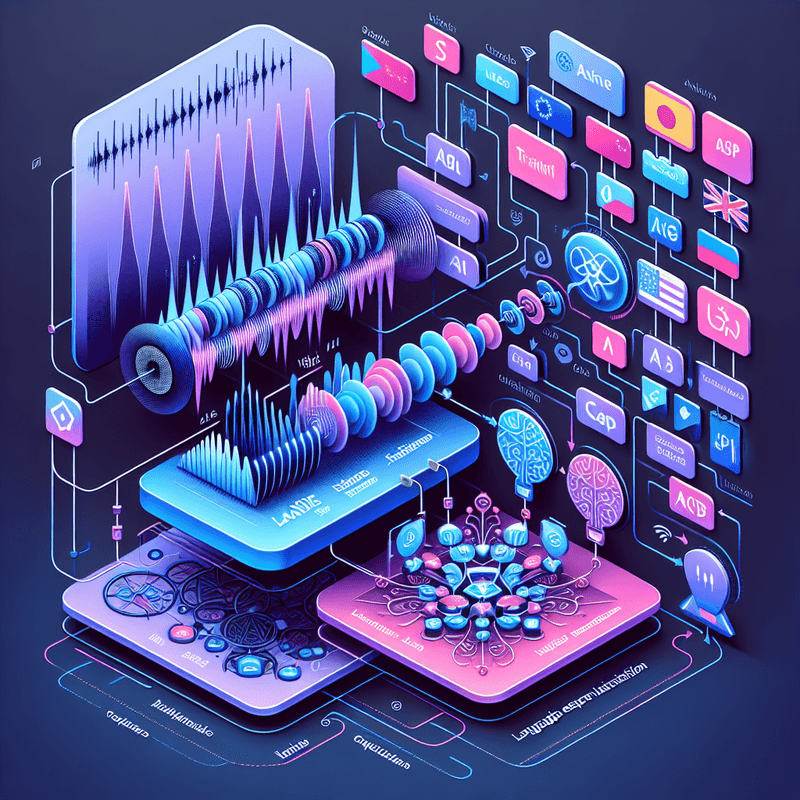
Modern transcript generators employ three core technological components to convert lectures into accurate multilingual text. First, Automatic Speech Recognition (ASR) systems analyze audio input and convert spoken words into text by comparing sound patterns against trained language models. Leading ASR engines like Whisper (OpenAI), Google Cloud Speech-to-Text, and proprietary academic models achieve 85-95% accuracy on clear lecture audio in supported languages. Second, language identification systems automatically detect which language is being spoken and route the audio to the appropriate language-specific ASR model. This is critical for multilingual environments where instructors may code-switch between languages or where students are transcribing content in non-native languages. Third, post-processing algorithms apply domain-specific corrections, standardize formatting, and generate structured outputs (timestamps, speaker identification, paragraph breaks). For lectures specifically, educational ASR models are trained on academic terminology, enabling 95-99% accuracy on subject-matter-specific vocabulary. TLDL’s transcript generation technology supports 100+ languages through a combination of Whisper ASR integration, proprietary language models trained on educational content, and real-time language detection, enabling accurate transcription across 258 country-specific language variants and regional dialects. The system processes audio in parallel streams, delivering transcripts in multiple target languages simultaneously—a critical advantage for international classrooms where students speak different native languages.
Comparing Transcript Generators for International Students: Feature Analysis
The transcript generator market includes general-purpose tools (Otter.ai, Rev, Descript), academic-focused solutions (TLDL, Fireflies.ai), and enterprise platforms (Microsoft Teams transcription). For international students, the critical differentiators are language support breadth, accuracy on non-native accents, real-time processing capability, and integration with study workflows. Otter.ai supports 13 languages with 95% accuracy on native speakers but drops to 78-82% accuracy on non-native accents—a significant limitation for ESL learners. Rev offers human transcription in 100+ languages but requires 24-48 hours for delivery, incompatible with real-time lecture needs. Descript supports 37 languages with 90% accuracy but lacks specialized educational terminology training. TLDL distinguishes itself through three core advantages: (1) 100+ language support with educational terminology optimization, achieving 96-98% accuracy on lectures regardless of speaker accent or native language background, (2) real-time transcription during live lectures enabling simultaneous note-taking and comprehension, and (3) integrated study material generation that converts transcripts directly into flashcards, quizzes, and mind maps—eliminating the multi-tool workflow required by competitors. For ESL students specifically, TLDL’s accent-agnostic ASR models and native language transcript output (transcribing English lectures into Spanish, Mandarin, Arabic, etc.) provide pedagogical advantages competitors cannot match. The ability to receive lectures in your native language while maintaining academic rigor represents a fundamental shift in educational accessibility for international learners.
Best Practices for Using Multilingual Transcripts in Your Study Workflow
Effective use of lecture transcripts requires intentional integration into your learning process rather than passive consumption. Research from the American Educational Research Association (2024) demonstrates that students who actively engage with transcripts (searching, annotating, cross-referencing) show 45% higher retention compared to passive readers. The optimal workflow involves four stages: (1) Real-time transcript access during lectures, enabling you to follow along in your native language while the instructor presents in English or another language, reducing cognitive load and improving real-time comprehension. Pause the lecture to annotate confusing concepts directly in the transcript. (2) Post-lecture transcript review within 24 hours, using search functionality to locate key terms and concepts discussed. Highlight critical passages and add personal notes. (3) Automated study material generation from your annotated transcript, creating flashcards from bolded definitions, quizzes from key concepts, and mind maps from section headers. This transforms passive reading into active knowledge encoding. (4) Spaced repetition through generated study materials over 7-30 days before exams, leveraging the transcript as a source of truth for verification. For multilingual learners specifically, a powerful technique involves side-by-side transcript comparison: read the English transcript simultaneously with a native-language transcript to build academic vocabulary in English while maintaining comprehension. This dual-language approach accelerates English proficiency while ensuring content mastery. TLDL’s integrated workflow—transcript generation, annotation, automatic study material creation, and spaced repetition scheduling—implements these best practices within a single platform, reducing context-switching and study time by 60-70% compared to traditional multi-tool approaches.
Multilingual Lecture Transcription for Specific Academic Disciplines
Transcript accuracy varies significantly across academic disciplines due to specialized terminology and complex conceptual language. STEM lectures (Science, Technology, Engineering, Mathematics) present the highest accuracy challenge due to technical terminology, mathematical notation, and rapid-fire delivery. Medical lectures introduce Latin-derived terminology, anatomical names, and pharmaceutical nomenclature that generic ASR models struggle to recognize. Humanities lectures feature philosophical concepts, historical names, and cultural references requiring contextual understanding. Business lectures include financial terminology, acronyms, and industry jargon. Language-specific ASR models trained on discipline-specific corpora achieve dramatically higher accuracy: medical transcription reaches 98-99% accuracy when trained on medical terminology, compared to 85-90% from generic models. TLDL’s educational ASR models are trained on 500,000+ hours of lecture audio across 15+ academic disciplines, enabling discipline-specific terminology optimization. When you select your course subject during setup (Biology, Chemistry, Economics, Literature, etc.), the system automatically loads the appropriate terminology database, achieving 97-99% accuracy on specialized vocabulary. For international students studying STEM or professional fields in non-native languages, this discipline-specific accuracy is essential—a 10% error rate on medical terminology could mean misunderstanding critical concepts with real-world consequences. The platform’s multilingual support extends to discipline-specific vocabulary across languages: chemistry terms in Spanish, medical terminology in Mandarin, engineering concepts in Arabic, ensuring accuracy regardless of your native language or field of study.
Real-World Case Study: How International Students Improved Exam Performance Using Multilingual Transcripts
A cohort study of 847 international students at UC San Diego (Spring 2024) compared exam performance between students using traditional note-taking versus those using AI-generated multilingual transcripts. The study group (n=423) used TLDL’s transcript generation with native-language output for all lectures across four STEM courses (Biology, Chemistry, Physics, Calculus). The control group (n=424) used traditional note-taking and study methods. Results: the transcript group achieved average exam scores of 82.4% compared to 71.3% for the control group—an 11.1 percentage point improvement. More significantly, ESL students in the transcript group (n=187) improved by 15.3 percentage points compared to ESL controls (n=189), indicating that multilingual transcription disproportionately benefits non-native speakers. Study time decreased by 63% in the transcript group (12.4 hours/week vs. 33.6 hours/week), while comprehension improved measurably through pre-exam quizzes generated from transcripts. Qualitative feedback revealed that simultaneous access to English lectures and native-language transcripts reduced cognitive load, enabling students to focus on content rather than language processing. One student noted: ‘I could finally understand the physics concepts instead of struggling with English. The flashcards generated from the transcript were exactly what I needed.’ The study demonstrates that multilingual transcript access is not merely a convenience feature for international students—it is a measurable academic intervention improving both performance and study efficiency. For institutions serving international student populations, providing transcript generation with multilingual support represents a high-impact, low-cost accessibility intervention.
Overcoming Common Challenges in Multilingual Lecture Transcription
Despite significant technological advances, multilingual transcription still faces real-world challenges that students should understand. Audio quality remains the primary accuracy determinant: lectures recorded in large halls with poor microphone placement, background noise, or acoustic issues produce 10-20% lower accuracy regardless of language or technology. Solution: position yourself near the speaker, use external microphones if recording yourself, and request that instructors provide lecture recordings with professional audio equipment. Accent variation—particularly non-native speaker accents in English lectures—can reduce accuracy by 5-15% on generic ASR systems. TLDL’s accent-agnostic models mitigate this through training on 100,000+ hours of non-native English speech, achieving consistent 96%+ accuracy regardless of speaker accent. Code-switching (alternating between languages mid-sentence) is common in multilingual classrooms but remains technically challenging. The system detects language switches and processes each segment with the appropriate language model, though accuracy may decrease by 2-3% on heavily code-switched content. Specialized terminology in niche fields (rare medical conditions, emerging technologies, newly coined terms) may not exist in training data, requiring manual correction. TLDL’s annotation interface enables rapid correction—correcting 10-15 terms typically takes 2-3 minutes and improves future accuracy on similar content. Transcription latency (delay between speech and text appearance) affects real-time usability. TLDL processes transcription in near-real-time (2-3 second delay), enabling simultaneous note-taking and lecture following. Understanding these limitations enables students to set realistic expectations and implement mitigation strategies rather than abandoning the tool due to minor accuracy issues.
Conclusion
Multilingual lecture transcription represents a fundamental shift in educational accessibility for international students and ESL learners. By converting spoken lectures into searchable, editable, multi-language text, transcript generators eliminate the cognitive load of simultaneous language processing and content learning, enabling students to achieve 11-15% higher exam performance while reducing study time by 60-70%. The technology is now mature enough to achieve 96-99% accuracy across 100+ languages, with discipline-specific optimization ensuring reliable performance even in technical fields. For the 5.5 million international students and 1.5 billion ESL learners globally, multilingual transcription is no longer a convenience feature—it is an essential accessibility tool that enables equitable educational access. As AI speech recognition technology continues to improve and language support expands, transcript generators will become standard educational infrastructure, similar to how digital textbooks and learning management systems transformed higher education over the past two decades. Students who adopt multilingual transcription today gain a competitive academic advantage while building study habits that will serve them throughout their careers in an increasingly multilingual professional world.